Prototyping Is A Process
Let's get back into the swing of things

I came to CIID due to one core philosophy - Learning by Doing. The way I like to work is through the process of making and testing and making and testing. My time as a researcher had given me lots of practice with the testing part, and I came to CIID to add the making portion.
As simple as that cycle of product creation seems, it’s easy to forget about. When, like us, you’re taking in large quantities of information and working under a tight deadline, the making takes precedent over the testing. We all want to create beautiful things, and in that goal the process can sometimes get lost, so I’m glad we got to spend our week back really solidifying a specific way of doing things.
One of my largest goals is to find my sense of play again. I’ve gotten so focused on everything I want to learn and do and be that I forgot the best way to learn and the reason I love design is Play! Low fidelity (easy simple quick) prototyping is the best place to do so, and I…really went for it.
The topic this week was to design household objects, and instead of being assigned topics we picked words from buckets. My team (Alec Davis, Sahil Islam) got Quiet, Slow, & Keyholder.
Goal: Play!
One of my major goals last year was to “get weirder.” Being in school means that I get to just create and explore, so I want to think bigger and do out of the box things. I’ve reframed the goal for this year as just to play more. And I got…pretty experimental.
Once we got the brief, we jumped right into ideating. We generated a lot of them, and using the framework of having to come up with a new idea every 30 seconds means that they got pretty weird. One of my favorite ones was about the idea of smell, since smells dissipate pretty slowly and don’t usually make any noise, so I prototyped it.
The prototype was a bowl with hot sauce and a bowl on top of it to put your keys in. People hated it because it smelled terrible
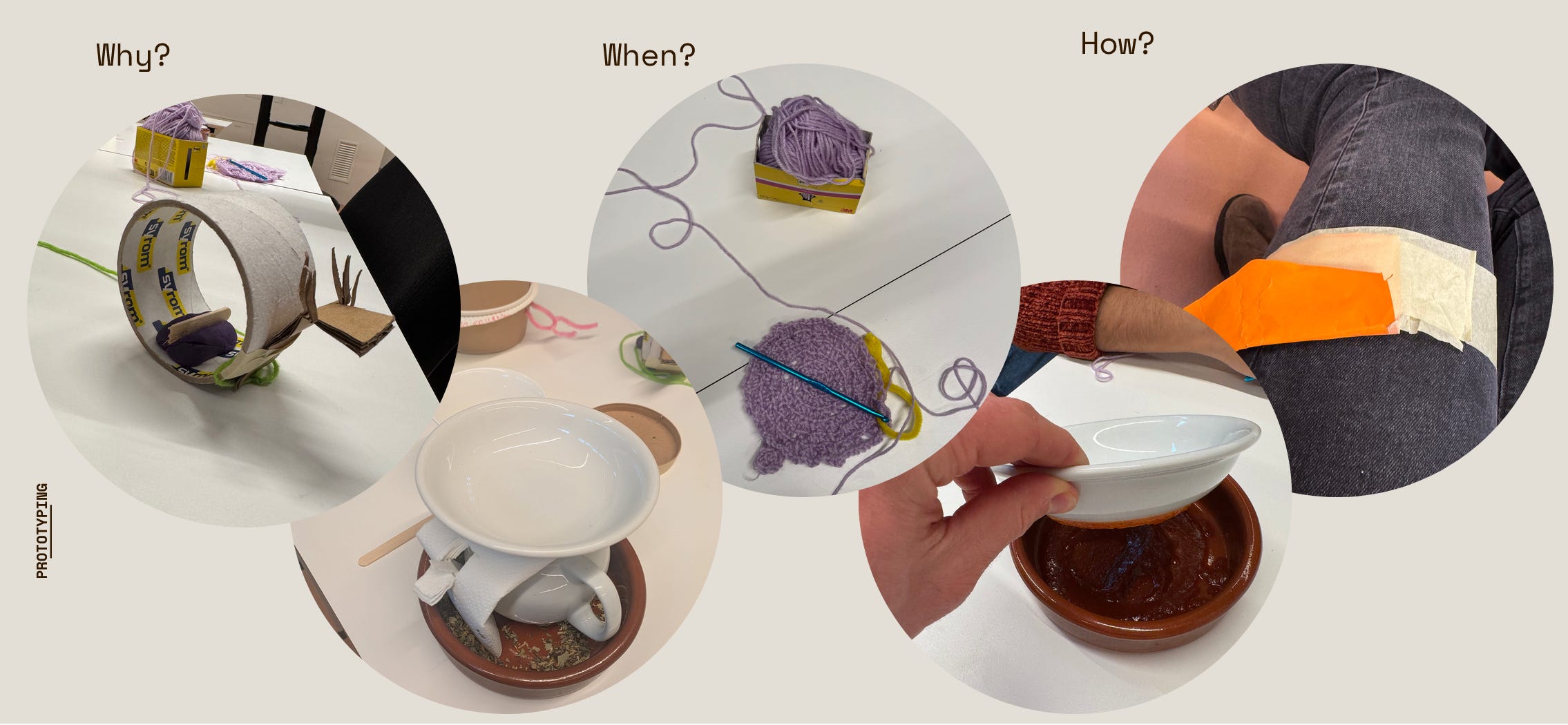
We made 5 prototypes pretty fast, which meant we could then compare and try out different ones to see which were the most viable. Instead of just discussing what ideas could work and what couldn’t we acted out the potential interactions of each one, which made it feel so much more realistic, and helped us see problems way earlier. In testing these ideas, the snail was decidedly adorable, pants pockets with separate keys & the crochet frustrating, the container confusing, and the hot sauce smelled terrible.
Low Fidelity Prototype Iterations
The next day we made even more prototypes, mostly moving along the container idea, since it had the most potential, and the snail because it was cute and fun, and trying to refine them further. For each idea, we brainstormed a few more along that same one together and then built them out. The smell one was already dead in the water, but I realized that using hot sauce meant people were reacting to that specific smell rather than an experience, so I used tea instead, and we explored the idea of a machine that made you a cup of tea when you got home. This got a more positive reaction, but the story/interaction made less sense, so we scrapped it and moved on. As cute as the snail was, it, like the key pants, wasn’t going to work for two major reasons:
When do you use a key holder? Either as you are leaving the house or as you’re coming back into it. The snail would wander around your house and you’d have to call or find it on your way out, which added time. If you’re in a rush to get out, it’s going to be frustrating and potentially dangerous, which begs the question - why would someone buy/use this? Conversely, the key pants, where each key is in a different pocket, would make it hard to get back into your house, which was irritating with no real benefit.
This meant that the key holder couldn’t seriously prevent you from getting in and out of your house. But we were still missing the why. In our bodystorming (acting it out) Jose took a deep breath to slow down (which made the jangling keys quiet). This was our why: In our fast paced world, having a moment to be quiet before leaving home and after coming back can be a nice moment. So, having a container that held your keys by the door and wouldn’t open unless you were nice to it could be quick enough while still creating the quiet behavior we wanted.
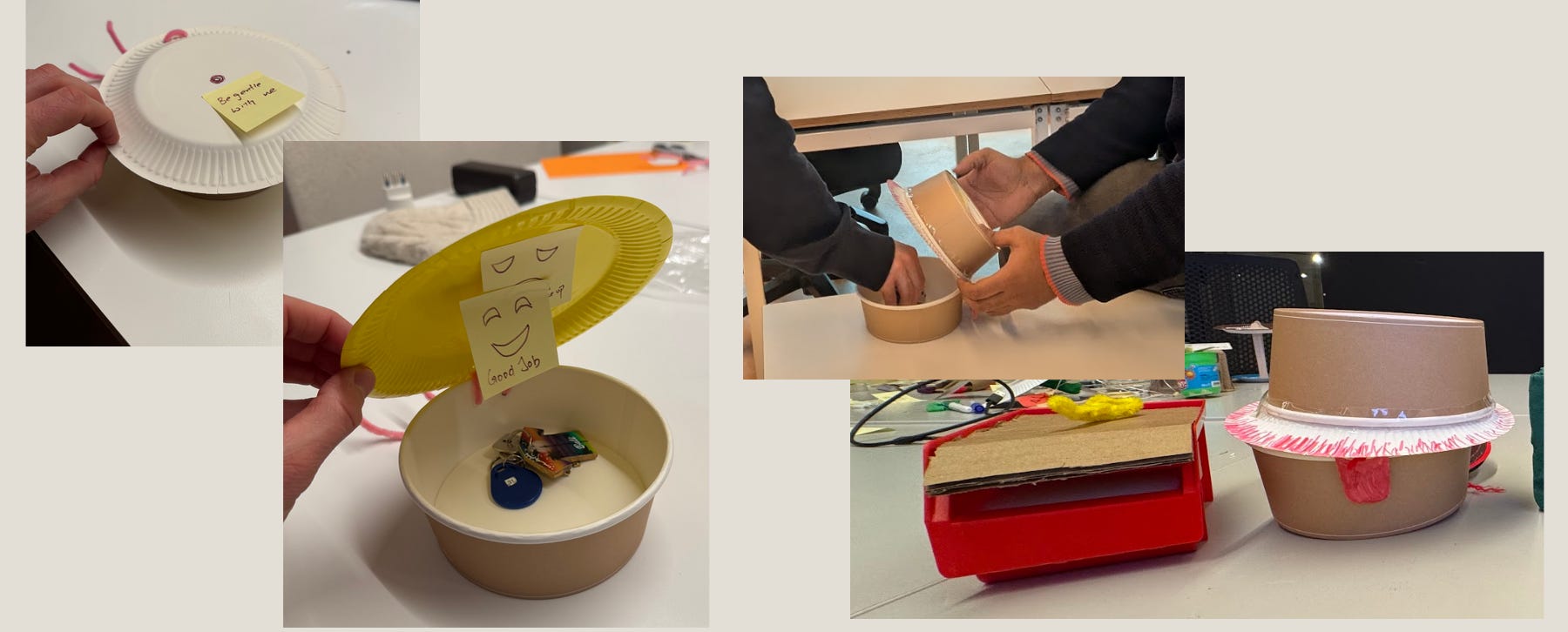
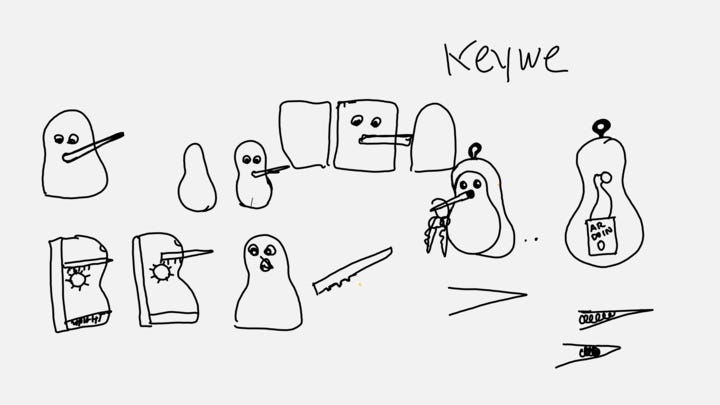
Instead of just talking in circles about which project was more viable, we got to build each one and test them out. We created various containers, some more gamified and some more along the metaphor of not scaring/waking up a small animal. Having multiple prototypes to compare with each other also really helped us discern what was working and not about specific topics. The main issue was that a container can hold pretty much anything - there wasn’t a way to tell that this is really for keys, so Jose and Andrea suggested we incorporate a key hook. Going back to the metaphor of an animal you want to be gentle with, maybe the keyhook could be a tongue!
But with a hook, having a container seemed unnecessary, what if instead of the container closing, the hook moved? Maybe it went up to let you put a key on it, and down to make the key drop/not let you place it if you were too loud.
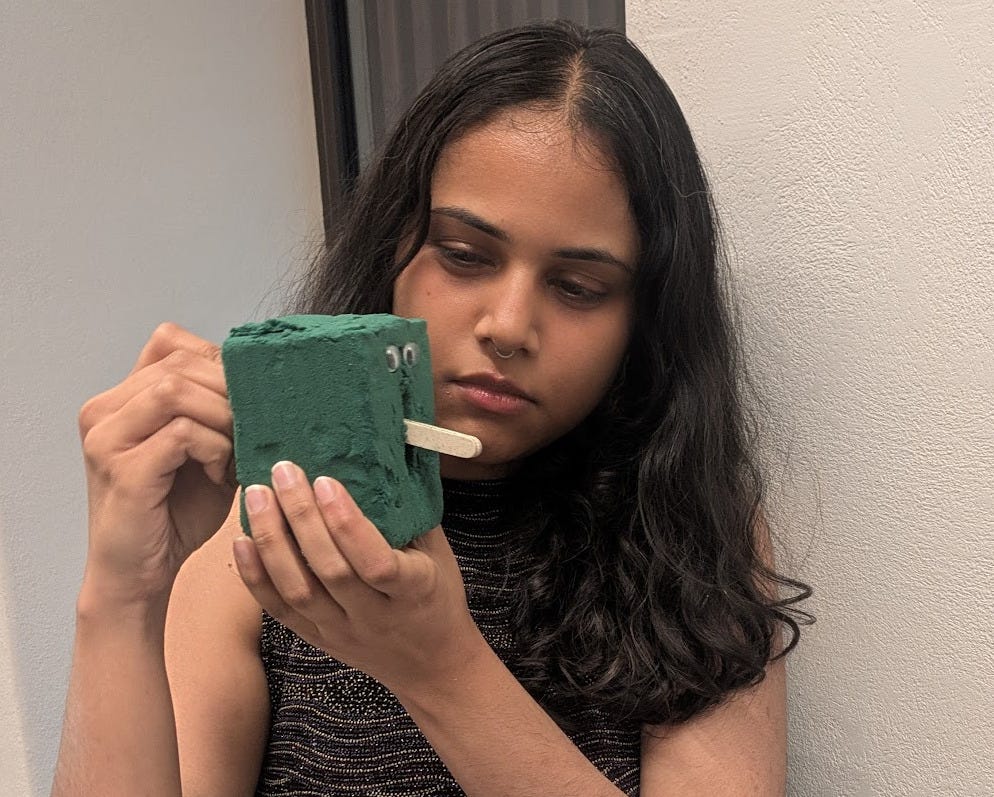
Our initial creature reminded us of a beak, leading to the name “KeyWe” (Alec and I made a lot of puns this week, this was one of the better ones, since kiwi birds also have long skinny beaks). In playing with the beak movement, it worked even better when retracting because it reminded us of an animal shrinking away in fear.
High Fidelity Prototyping
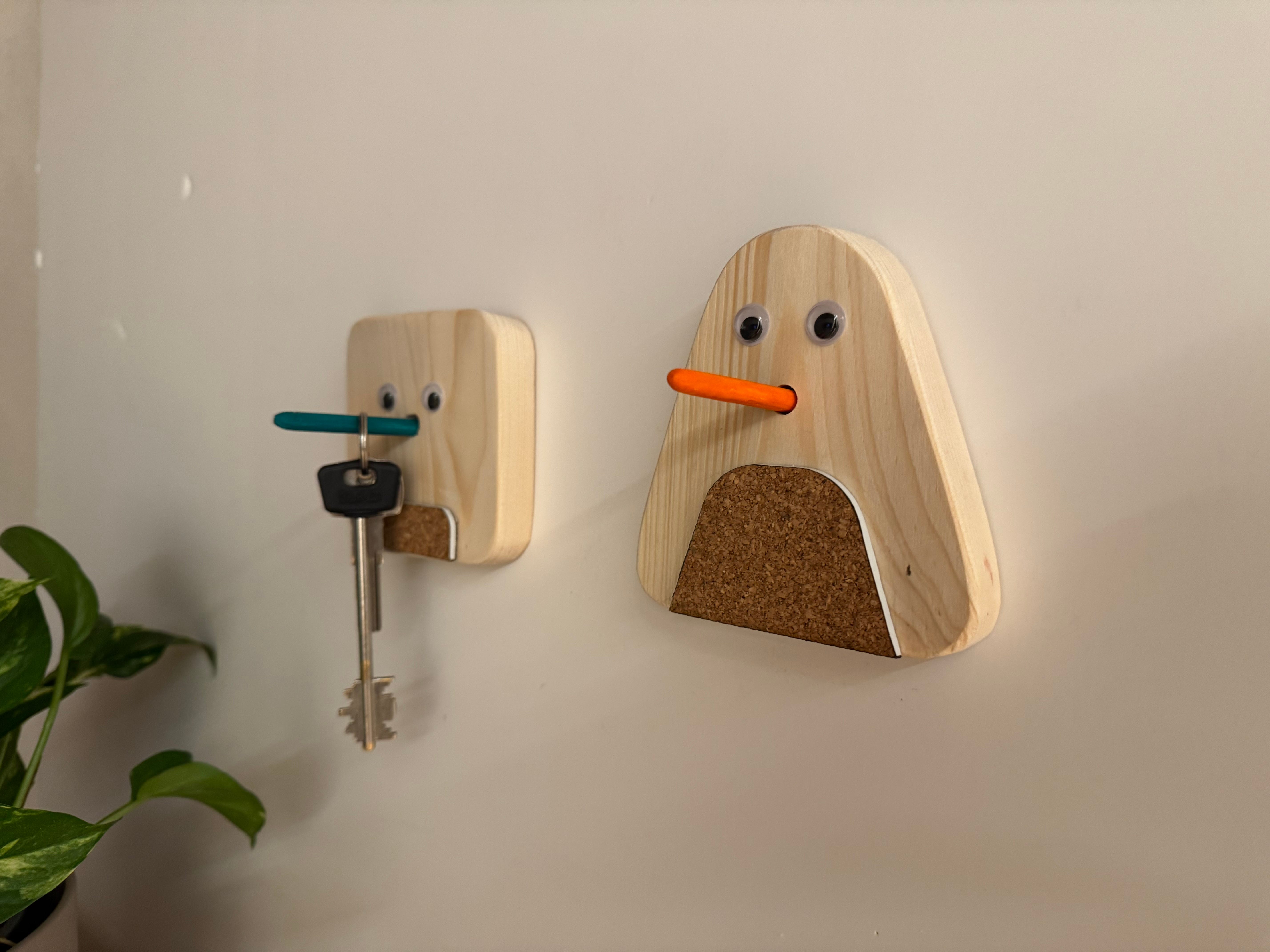
So we started building it! Wood worked well because it could be something you hung on your wall, but we wanted to make sure the entire form factor was compelling, so we tried out a few different shapes and external looks.
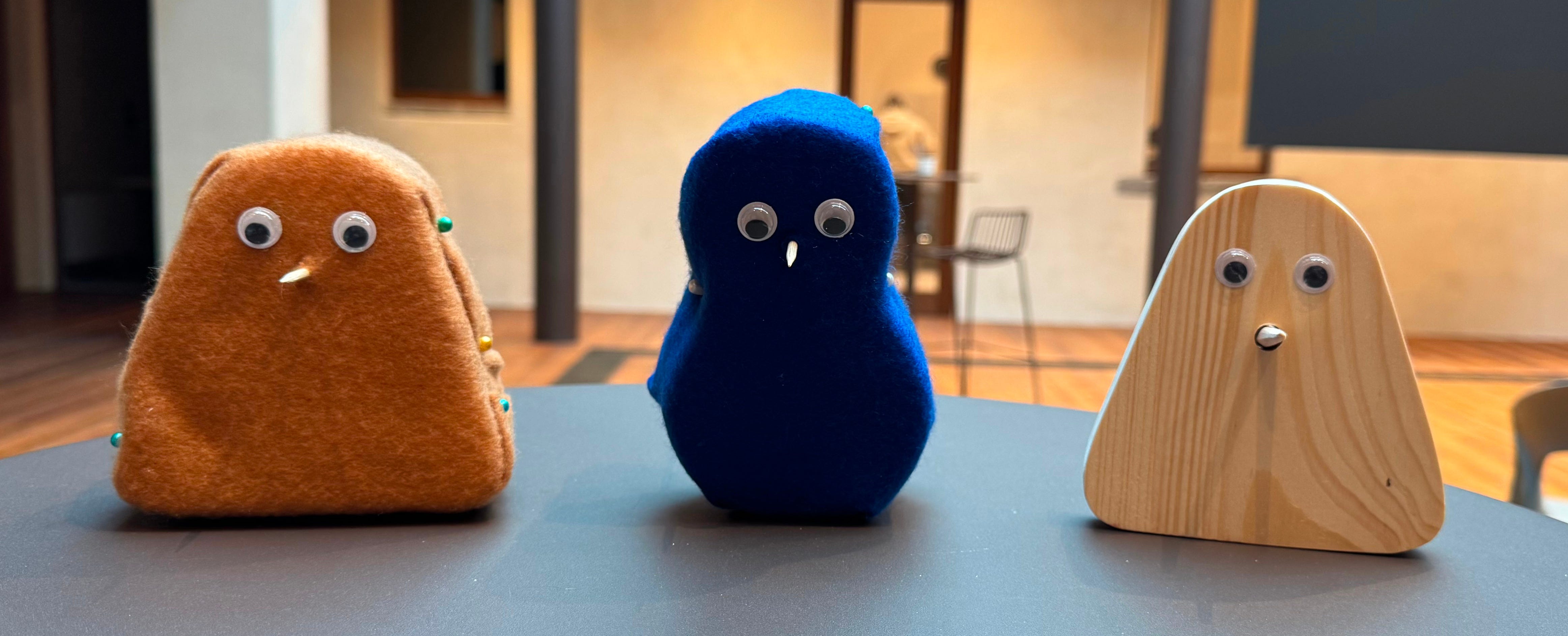
The triangle shape was more abstract and the wood easier to clean, which people preferred as something they could have on their wall. They liked the color of the bright blue, and thought cloth communicated quiet better, so we decided to create little cork “stomachs” to make the keys quieter, and make the beaks colorful to add a pop of color.
I spent some time trying out the electronics to make this workable. Initially we thought of using a distance sensor to measure how fast they were moving, but it would be cool to have a microphone detect the sound and really stay within the story. For the beak movement, we needed a motor attachment, and a gear if we were to do in and out rather than up and down.
I had some trouble getting it all working, and since all of us were more interested in the process of making rather than the electronics, we decided not to work on that further. I wish I hadn’t given up on it so early, because I think getting the gear working would have been really interesting, but given that it was mounted on a wall and someone could stand behind and control it, having the mechanism wasn’t absolutely necessary for our presentation.
Presenting
I have a problem. I don’t like making videos.
I’m not entirely sure why I dislike video making so much - I love tv/movies and storytelling in general. Presenting a concept with words or in a slideshow comes almost naturally to me. Alas I find planning a script stressful, filming tedious, editing difficult, and acting embarrasing. Having to act in so many videos still feels weird, but I’m getting less self-concious about it. In talking with other classmates, I think that improving my editing skills may help, as I don’t like feeling like I can’t contribute. As for the tedium of filming, the better we get at it the shorter time it will take, and I can enjoy framing a shot even if I dislike figuring out lighting.
That being said, Alec did a great job editing our video, Sahil did some wonderful acting, and I got to try voiceover work for the first time!
Major Learnings:
I LOVE low-fidelity prototyping. It’s so much fun to just grab whatever you have around you and quickly create something. When you’re talking about something it can be hard to see the problems, so on top of the inherent satisfaction of creation I feel like more progress is made.
Definitely made headway on allowing myself to play more, I’m glad I got the time to explore more ideas and topics.
Thinking of Prototyping as a Process really helped me fill the gaps in how I work. I felt like there was something missing in my working process and I think it was that we would get bogged down in ideation or issues with the idea and the execution wasn’t to the level I was hoping. By focusing on execution and letting that carry the idea forward I was able to improve the entire process, and I hope to keep that energy moving forward.
Notes:
Slowly getting back into the habit of both school and writing these after vacation!
I’m going to be trying a few different blog styles to see what I like best in terms of recording and presenting each week, especially as we dive into more multi-week projects/classes.